Why add vision to an automated cell
A palletising robot does the same motion thousands of times a day. What changes is everything around it: a crate arrives rotated, a product sits too high, a slip sheet is missing, a stack starts to lean. Those small things cause most of the stops and most of the pallets that fall over later in the truck.
Cameras are a cheap way to see those problems early, without touching the robot's own control system.
What a demo can and can't tell you
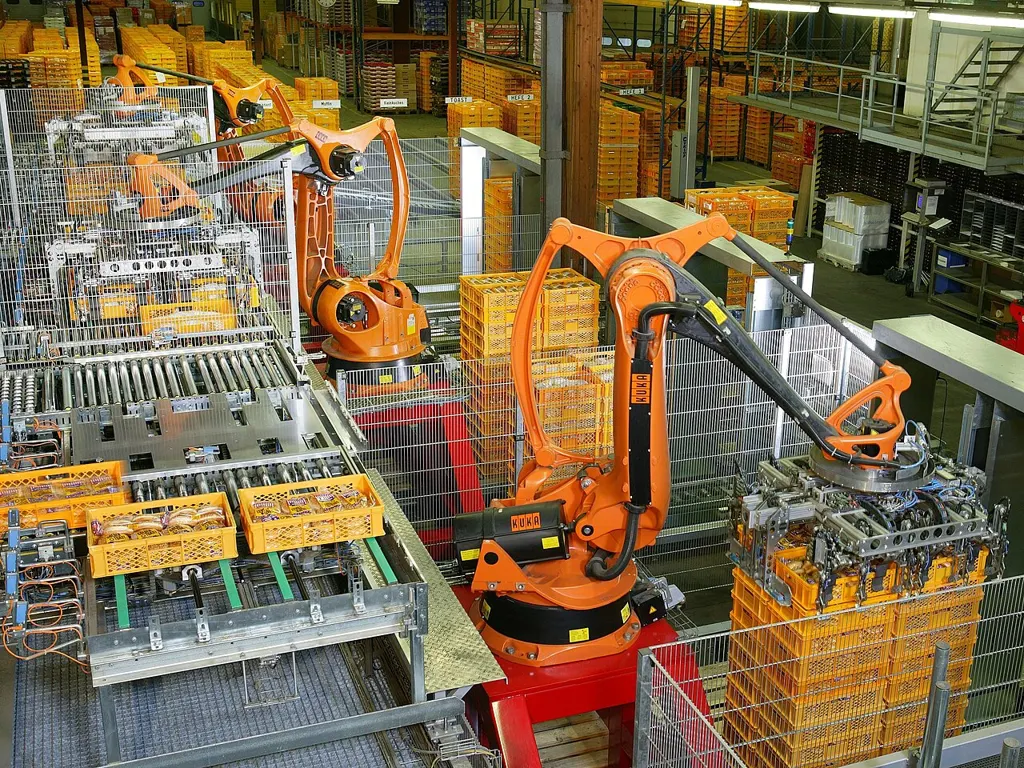
A photo of a cell like the one above shows a model can find robot arms, crates, and conveyors. That's the easy part. The useful questions are narrower: is this layer pattern correct? Is this stack within height and alignment tolerance? Did a crate tilt during placement?
Those need measurements, not just boxes, which usually means fixed cameras, known geometry, and sometimes depth.
What goes into a production setup
- Fixed cameras with a stable view of the pallet station, and depth sensing when stack height and lean matter.
- Checks defined with your production team: allowed tolerances per product and pattern, not a generic "looks fine".
- Fast inference on an edge device next to the cell, so results arrive before the pallet moves on.
- A safe connection to the line: usually a signal to stop or divert, never direct control of the robot.
- A record of every pallet: photo, checks, and result, so quality issues can be traced back later.
Explaining stops in plain words
This is where vision-language models are genuinely useful on a line. When the cell stops, a short clip goes to a VLM that writes what it sees: "crate rotated 90 degrees on infeed, robot paused". Over weeks, that becomes a searchable history of every stop and its likely cause, which is gold for the maintenance team.
Safety stays with safety systems
Vision can add a layer of awareness, for example flagging a person inside a fenced cell. It should never replace certified safety equipment like light curtains and interlocks. I design these systems as a second set of eyes, and that boundary is written down from the start.
Where to start
Pick the failure that costs you most, often fallen pallets or a specific recurring stop, and put one camera on that. Measure how often it happens, build the check, and compare before and after.